How to Decide What to Keep When Decluttering (When You Can’t Decide)

You pick up an item, stare at it for a few seconds, put it down, pick it up again, then move it into a “deal with later” pile.
Then it happens again. And again. Before long you’ve spent twenty minutes holding things and making absolutely no progress.
Sound familiar? How to decide what to keep when decluttering is easier said than done. It’s all good when you have these ideas to declutter your home you forget you have a lot of discissions ahead.
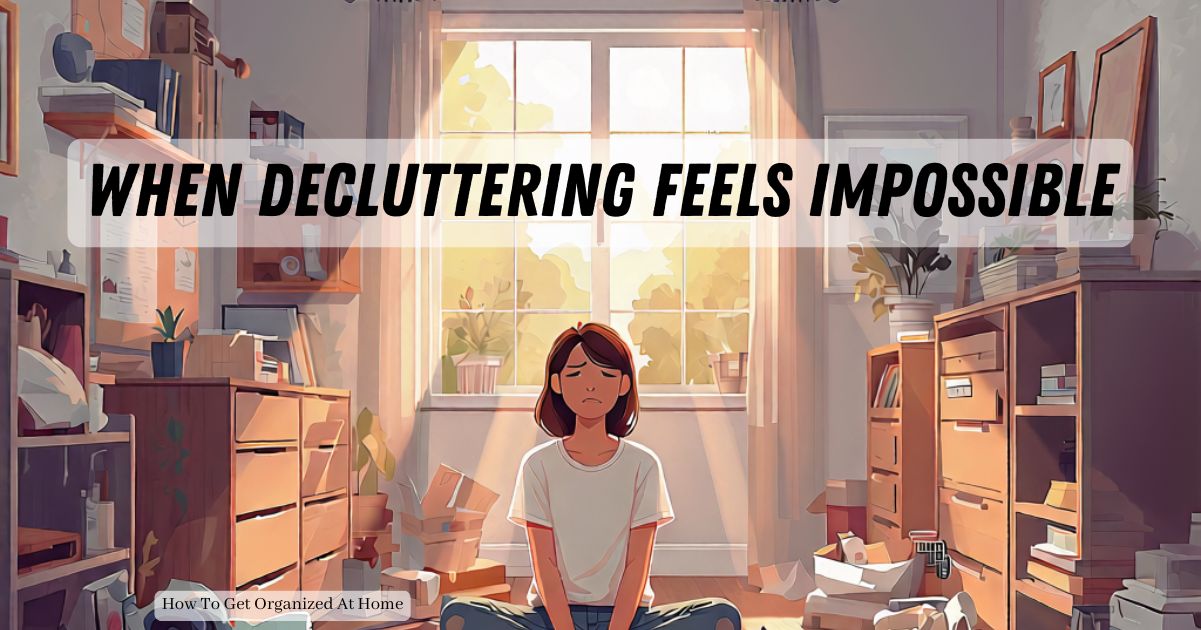
One of the hardest parts of decluttering isn’t finding things to get rid of. It’s making decisions. Because sometimes the question isn’t simply:
“Do I keep this?”
It’s:
- “What if I need it one day?”
- “What if I regret getting rid of it?”
- “What if this reminds me of someone?”
- “What if I’m making the wrong decision?”
When every item comes with a question, decluttering slows to a crawl. Instead of clearing space, you end up moving the same things from one pile to another.
The good news is that this is completely normal. Struggling to decide doesn’t mean you’re bad at decluttering. It simply means you’re facing the hardest part of the process.
Affiliate links are included for your convenience. (This means if you purchase after clicking a link I will earn a small commission which won’t cost you a penny more!) Click here to read my full disclosure and privacy policy.
Why It’s So Hard To Decide What To Keep When Decluttering
Every item in your home asks you to make a decision.
- Keep it.
- Donate it.
- Sell it.
- Recycle it.
- Throw it away.
That might not sound exhausting, but every decision uses a little bit of mental energy. By the time you’ve made dozens or even hundreds of choices, your brain starts looking for the easiest option, which is often to keep everything or put it aside for “later.”
This is known as decision fatigue.
It’s why you can begin a decluttering session feeling motivated and end it staring at an old phone charger, unable to decide whether it deserves a place in your home.
You’re not indecisive.
You’re mentally tired.
And sometimes what makes a decision difficult has very little to do with the object itself.
If you’ve ever finished a decluttering session feeling completely drained, there’s a good reason for it. Decluttering isn’t just physical work, it’s emotional work too. I explain why this happens and how to cope with it in Why Decluttering Feels So Emotionally Exhausting.
The Three Things That Usually Get In The Way
1. Sentimental Value
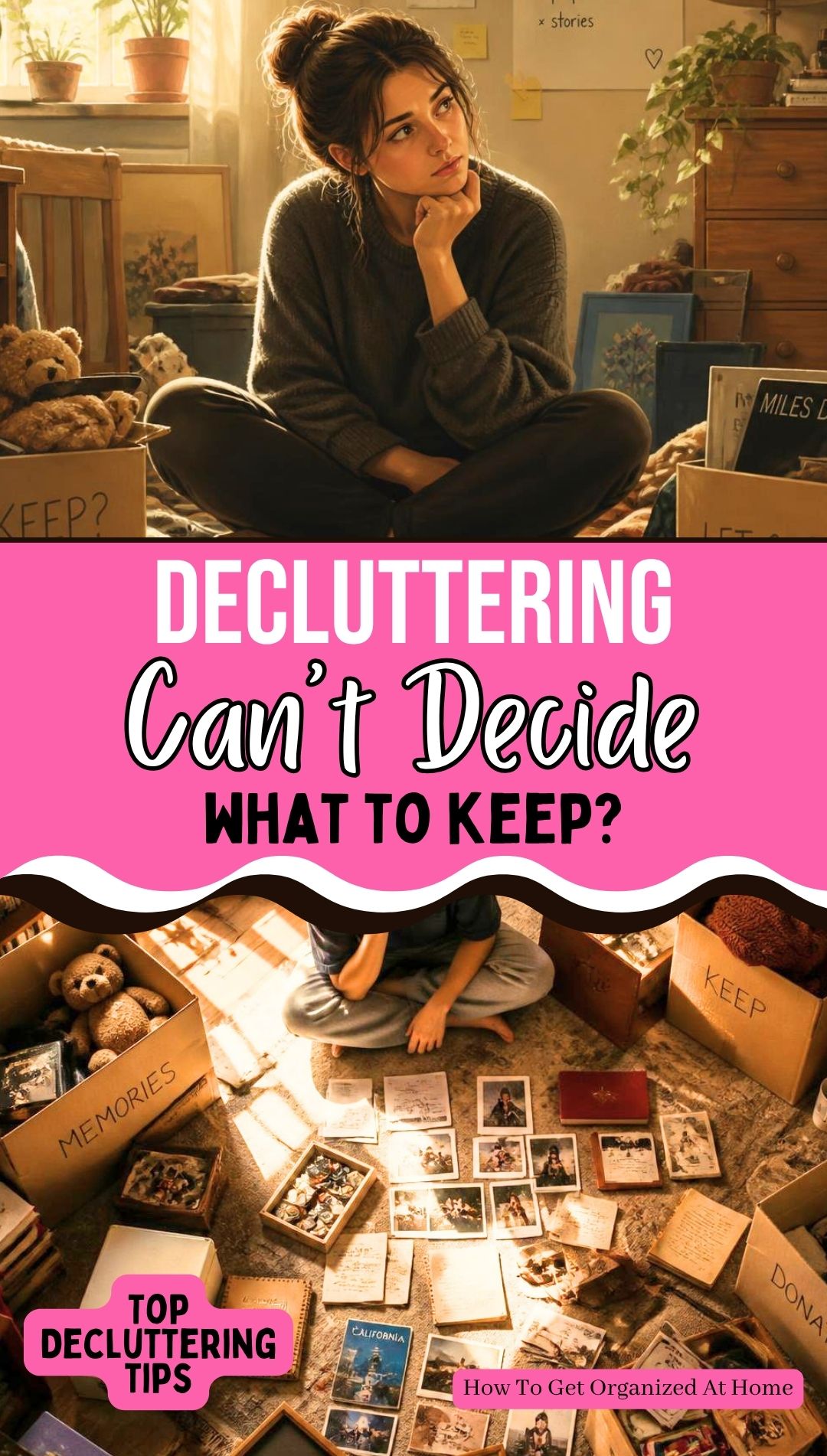
Some possessions represent much more than the item itself.
- A child’s drawing.
- A gift from someone you love.
- Something that reminds you of a happy time.
Letting go can feel like you’re letting go of the memory.
Instead, ask yourself:
- Do I love the item or the memory it represents?
- Can I keep the memory without keeping the object?
- If I saw this in a shop today, would I buy it again?
Not every sentimental item needs to go.
But not every sentimental item needs to stay either.
Choose the things that genuinely mean the most, rather than keeping everything.
2. The Money You Spent
This is one of the biggest reasons people keep things they never use.
You spent good money on it.
Maybe it was expensive.
Maybe you bought it with the best intentions.
Getting rid of it can feel like admitting you made a mistake.
But the money has already been spent.
Keeping something you never use doesn’t get that money back.
Instead, it often costs you more in storage space, clutter, and frustration.
Rather than asking:
“How much did this cost?”
Ask:
“Is this adding value to my life today?”
3. Guilt
Guilt is surprisingly powerful.
You might keep something because:
- It was a gift.
- Someone expects you to have it.
- You planned to learn a new hobby.
- You thought you’d lose weight and wear those clothes again.
Ask yourself:
- Am I keeping this because I truly want it?
- Or because I feel guilty about letting it go?
You’re allowed to change your mind.
You’re allowed to outgrow hobbies.
You’re allowed to appreciate a gift without keeping it forever.
How To Decide What To Keep When Decluttering: Five Questions To Ask
When you’re completely stuck, don’t rely on your emotions alone.
Instead, ask yourself these five questions.
1. Have I Used This In The Last Year?
For everyday items, this is often the simplest test.
If you haven’t used it in the last twelve months, there’s a good chance you don’t need it.
Of course, there are exceptions for seasonal decorations, emergency supplies, and specialist equipment.
2. Would I Buy This Again Today?
Imagine seeing the exact same item in a shop.
Would you happily spend money on it?
Or would you walk straight past?
Your answer tells you a lot.
3. Is This The Best Version I Own?
Many of us keep duplicates.
- Five spatulas.
- Three sets of measuring cups.
- Several nearly identical handbags.
Choose your favourite and let the extras go.
Keeping the best often makes the decision much easier.
4. Am I Keeping It Out Of Fear?
Fear often sounds like:
- What if I need it?
- What if I regret it?
- What if I can’t replace it?
Sometimes these are valid concerns.
Often they’re simply worries that never become reality.
If replacing the item would be inexpensive or easy, you may not need to give it permanent space in your home.
5. Would Someone Else Benefit From This More Than I Do?
If something has been sitting unused for years, imagine someone else actually enjoying it.
That simple shift in perspective can make letting go feel much easier.
Start With The Easy Decisions
If every single object feels difficult, you’re probably starting with the wrong category.
Don’t begin with family photographs.
Or keepsakes.
Or your wedding dress.
Instead, build confidence by making easy decisions first.
Look for:
- Broken items
- Expired products
- Empty packaging
- Duplicates
- Things that no longer work
- Items you forgot you even owned
Having a few reusable donation bags ready makes it easier to remove items once you’ve made the decision.
Each small decision makes the next one feel easier.
Momentum matters.
If you’re finding that every decision feels overwhelming, it may be a sign to slow down rather than stop altogether. Breaking decluttering into smaller, manageable sessions can make the whole process feel much less daunting. You’ll find more practical tips in How to Declutter Your Home Without Feeling Overwhelmed.
Try The Maybe Box Method
Sometimes you genuinely can’t decide.
That’s okay.
Instead of forcing yourself to make a decision you’re uncomfortable with, create one “Maybe Box.”
- Place the uncertain items inside.
- Write today’s date on the box.
- Then put it somewhere out of sight for three to six months.
- During that time, don’t open it unless you’re looking for something specific.
If you never think about the items inside or never need them, you’ve probably already found your answer.
The important part is to limit yourself to one box.
The Maybe Box is meant to delay a handful of difficult decisions, not become permanent storage for everything you don’t want to deal with. Having a dedicated box for uncertain items can stop them from ending up back in random piles around your home. A simple lidded storage box or basket can make this process much easier.
Adding a simple label can help you remember what’s inside and when you created the box. A small label maker can also be useful when you’re creating decluttering systems throughout your home.
Don’t Aim For Perfect Decisions
One of the biggest mistakes people make is believing every decision has to be perfect.
It doesn’t.
You’re not signing a contract.
You’re simply deciding whether something deserves space in your home right now.
Will you occasionally get rid of something and later wish you’d kept it?
Probably.
Most people have at least one item they regret donating.
But very few people regret having less clutter, more space, and a home that’s easier to clean and enjoy.
Progress matters far more than perfection.
If you’re ready to stop second-guessing yourself and finally make progress, my 7-Day Decluttering Jumpstart will walk you through one manageable step at a time so you can build confidence without feeling overwhelmed.
Final Thoughts
If you’re struggling to decide whether to keep something, remember that you’re not trying to predict the future.
You’re making the best decision you can with the information you have today.
Trust yourself.
Ask a few simple questions.
Accept that not every choice will feel easy.
Then move on to the next item.
Because decluttering isn’t about making hundreds of perfect decisions. It’s about making one good decision after another.
And if you’re still feeling stuck, don’t try to tackle the whole house today.
Pick one drawer, one shelf, or one small box. Remember, you don’t have to solve your entire clutter problem in one afternoon. Small, consistent actions make a bigger difference than occasional marathon decluttering sessions. If you’re looking for more practical ways to make progress, you’ll find plenty of ideas in my guide on 10 Ways to Deal With Clutter.
One decision leads to another, and before you know it, you’ve made more progress than you thought possible.
Related Articles: