How To Organize Cords And Cables In Your Home


Cords and cables seem to have a habit of appearing everywhere. There are charging cables beside the bed, wires behind the TV, chargers in drawers and sometimes a mystery cable that nobody can remember owning.
Not only can all those cords make an area look cluttered, but they can also make cleaning more difficult. Moving cables every time you want to dust or vacuum gets annoying very quickly.
The good news is that organizing your cords and cables doesn’t have to mean creating a complicated system or hiding every wire in your home.
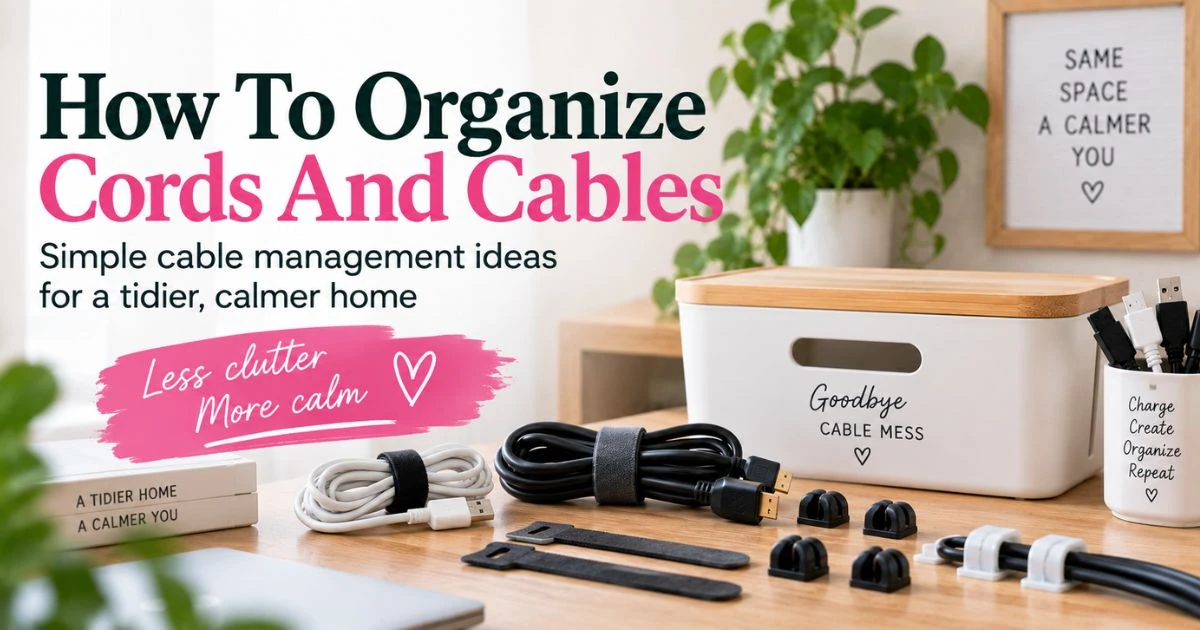
A few simple cable management ideas can help you deal with the cords you use every day, organize the ones you need to keep and finally get rid of some of those mystery cables taking up space.
Affiliate links are included for your convenience. (This means if you purchase after clicking a link I will earn a small commission which won’t cost you a penny more!) Click here to read my full disclosure and privacy policy.
Start By Sorting The Cords And Cables You Already Have
Before buying anything to organize your cables, it’s worth finding out exactly what you have.
Start with the loose cables and chargers you’ve accumulated around your home. You don’t need to unplug every appliance or dismantle your TV setup. We’re looking at the cables that have ended up in drawers, cupboards, baskets and other random places.
Sort through them and ask:
- Do I know what this cable belongs to?
- Do I still own the device it works with?
- Do I already have another cable that does the same job?
- Do I actually need to keep this?
- Is the cable damaged or unsafe to use?
Be careful with mystery cables. If you don’t immediately recognize one, that doesn’t automatically mean it’s rubbish. Put unidentified cables to one side until you’ve checked the devices in your home.
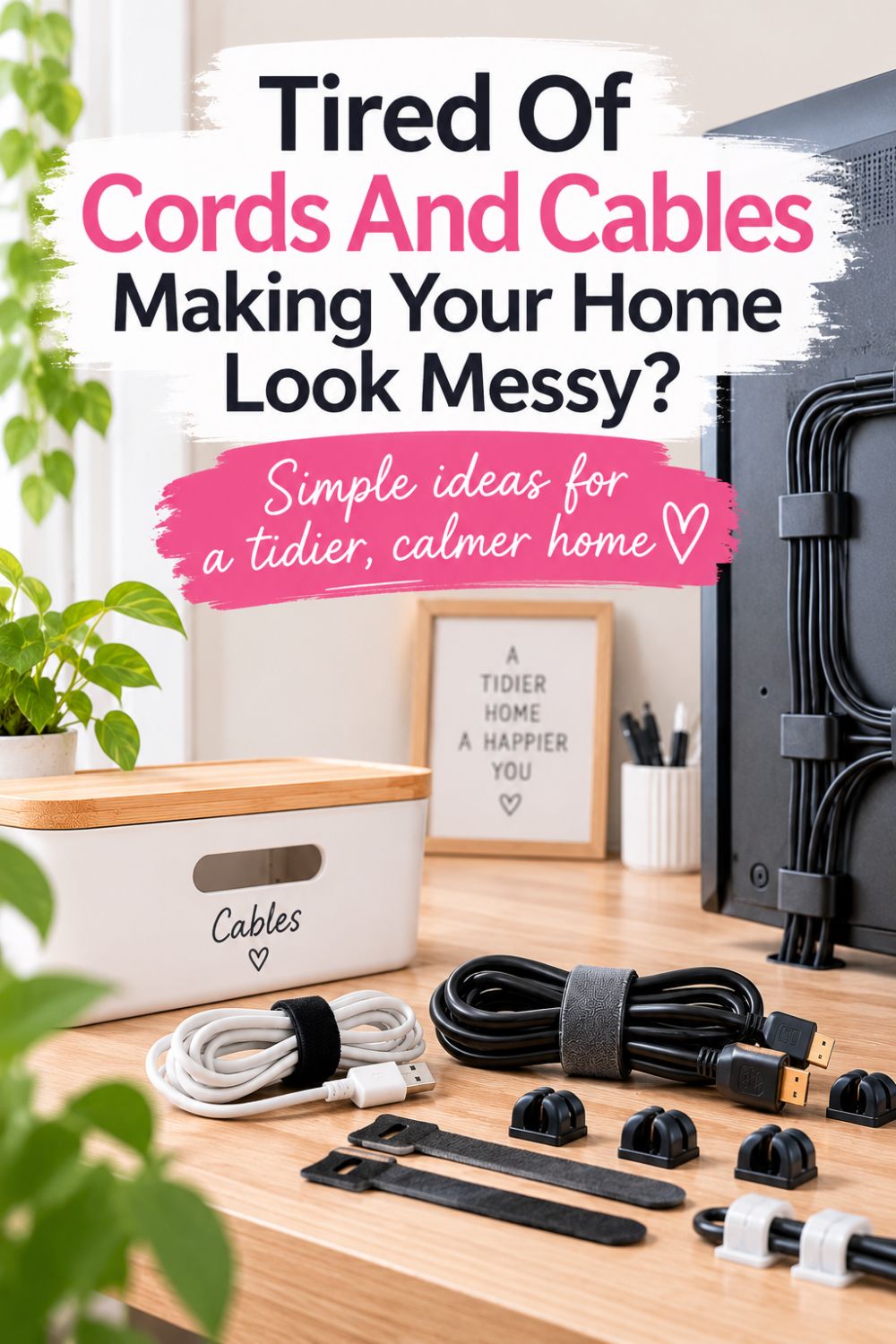
Once you’ve removed the cables you no longer need, separate what’s left into those you use regularly and those you only need occasionally.
This makes the next part much easier because you’re organizing cables you actually need rather than finding prettier ways to store clutter.
Simple Cable Management Ideas For Your Home
There isn’t one cable or cord management product that’s right for every cord in your home.
A charging cable beside your bed needs a different solution from a bundle of wires behind your TV. Think about what is actually annoying you about the cable before deciding how to manage it.
Use Reusable Cable Management Ties
Reusable ties are one of the simplest ways to keep cables organized.
They’re useful for gathering excess cable so it isn’t trailing across the floor or getting tangled with other cords. They’re also handy for securing cables before putting them into storage.
I prefer reusable self-gripping cable ties for many jobs because you can open them again when you need to change or move a cable.
Don’t pull a tie so tightly that you’re putting unnecessary pressure on the cable. The aim is simply to keep things together and manageable.
Use Cable Management Clips For Cords You Use Every Day
You know that charging cable that disappears behind the bedside table approximately three seconds after you unplug your phone?
Adhesive cable clips can give frequently used cords a permanent place to sit.
They’re particularly useful on bedside tables, around charging areas or anywhere you regularly unplug a device but want the cable to remain within reach.
If your desk is one of your problem areas, these cute desk organizers and accessories can help you tackle the rest of the clutter too.
Before attaching adhesive clips to furniture or another surface, check that the adhesive is suitable for it and consider whether you’re likely to want to move the clip later.
Use Cable Sleeves To Group Cords Together
If several cables need to travel in the same direction, a zipped cable sleeve can make them easier to manage.
Instead of looking at several individual wires, you’re grouping them together into one manageable bundle.
They’re particularly useful in areas where you have several permanent cables, but make sure you can still access individual cords when you need to replace or move something.
Use A Charging Station To Control Charging Cables
If everyone in your home charges their devices in the same area, you can quickly end up with a pile of plugs, cables, phones and tablets.
Creating a charging station for multiple devices gives those items a specific home.
It doesn’t need to be elaborate. What matters is having somewhere for the devices to sit and a simple way to keep the charging cables from spreading across every flat surface in your home.
How To Organize Cords And Cables Behind Your TV
The area behind the TV is one of those places that’s very easy to ignore until you need to unplug something.
Then you’re faced with a tangle of identical-looking black cables and have absolutely no idea which one you’re supposed to pull out.
Before organizing the cables behind your TV, identify what each one belongs to. Labeling them now can save a lot of frustration later.
Remove any cables that belong to equipment you no longer use and gently untangle what’s left.
Group together cables that naturally need to travel in the same direction. Reusable ties, clips or cable sleeves can help keep them under control, depending on your setup.
Avoid creating extremely tight bundles or blocking ventilation around electrical equipment. You still need to be able to safely access your devices and cables when something needs changing.
And remember that the back of the TV doesn’t need to look Instagram-worthy. If the cables are safe, identifiable and easy to access, you’ve achieved what you actually needed to achieve.
How To Keep Charging Cables Organized
Charging cables tend to cause problems because we’re constantly plugging and unplugging them.
Instead of expecting everyone to carefully put a charging cable away after every use, make the easiest option the organized option.
If you regularly charge your phone beside the bed, give that cable a permanent place where it can’t fall behind the furniture.
If several devices are charged on the kitchen counter, consider creating one charging area rather than allowing chargers to spread across the kitchen.
For families with multiple devices, labeling chargers can also help prevent arguments over who has stolen whose cable.
The best system is one that works with where you already charge your devices rather than trying to force everyone to develop completely new habits.
Renter-Friendly Cable Management Ideas
Organizing cables can be slightly more complicated when you’re renting because you don’t necessarily want to drill holes or attach something permanently to a wall.
Fortunately, you can still make a big difference.
Reusable cable ties and sleeves don’t need to be attached to the property at all. Furniture can sometimes be positioned so permanent cables run neatly behind it rather than across an open area.
Removable cable clips can also be useful, but don’t assume that something described as removable can’t damage a particular surface. Check the manufacturer’s instructions and test products where appropriate before using them on walls or furniture.
You don’t have to make permanent changes to stop cables taking over a rented home.
Label Your Plugs And Cables
Labeling cables sounds like such a tiny job, but it’s one you’ll appreciate every time you need to unplug something.
This is especially useful behind your TV, around gaming consoles, computers and anywhere else you have several similar cables plugged in together.
You don’t need a complicated labeling system. You simply need enough information to tell you what the cable belongs to. Cable labels make this easy because you can identify each cord without creating a complicated system.
If you want to use labels in other areas of your home too, I’ve got plenty of creative label ideas to help you organize your home.
You can also label cables before putting them into storage. Six months from now, “old tablet charger” is considerably more useful than opening a box and wondering what on earth that black cable is for.
If both ends of a cable are difficult to identify once everything is connected, label both ends.
How To Store Cords And Cables You’re Not Using
Not every cable needs to stay plugged in or within easy reach.
For cables you need occasionally, create a designated storage area rather than letting them migrate into every junk drawer in the house.
Loosely coil each cable and secure it so it doesn’t become tangled with everything around it. Label cables that aren’t immediately obvious and group similar items together.
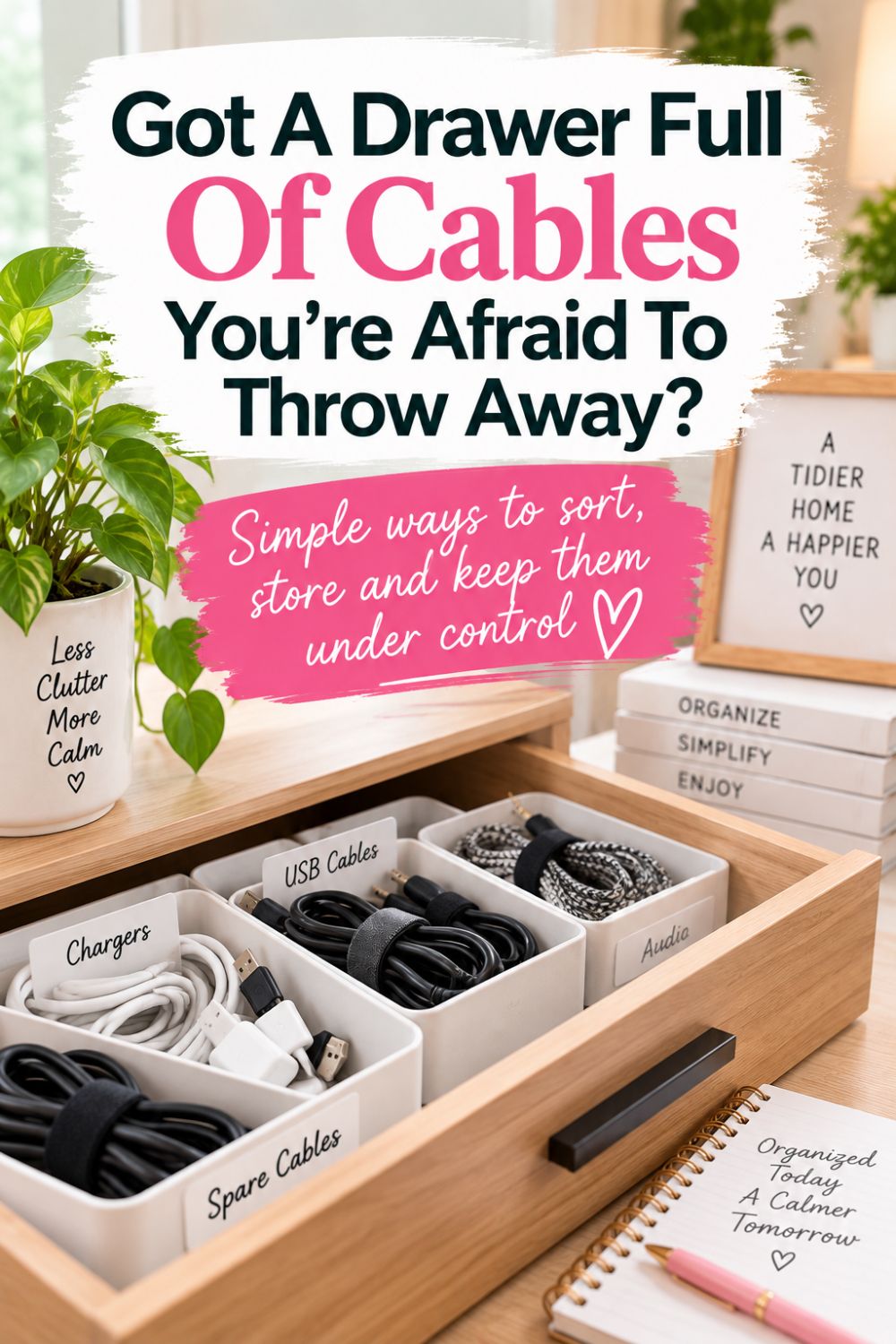
Depending on how many you have, you might use small containers, pouches, a cable storage organizer, or sections within a drawer.
The important thing is that all your spare cables have a home and you know where to look when you need one.
It’s also worth going through this storage occasionally. Technology changes, devices leave the house and somehow their chargers have a habit of staying behind for another five years.
Keeping Your Cables Organized Is Easier Than Starting Again
You don’t need perfectly hidden cables or an expensive cable management system to make your home feel more organized.
Start by identifying your cords and cables and getting rid of the ones you’re sure you no longer need. Give frequently used charging cables a permanent place, use simple cable management products where they solve a specific problem, and label the cables that are difficult to identify.
Then give your spare cords and chargers one designated storage area.
The goal isn’t to pretend your home doesn’t contain cables. It’s to stop those cables from becoming another source of clutter and frustration.