What Are The Benefits Of Assigning Chores At Home


Are you fed up with doing everything around the home while no one else seems to help with chores or household tasks? Maybe you know you need a better system for sharing the responsibilities of running your home, but you aren’t sure where to start.
The benefits of assigning chores at home go far beyond simply getting some help with the cleaning. Sharing household responsibilities can take the pressure off one person, teach important life skills and help everyone understand that looking after a home is a shared responsibility.
These simple and easy home management tips will help you think about how you plan, distribute and follow through with household chores in a way that works for your family.
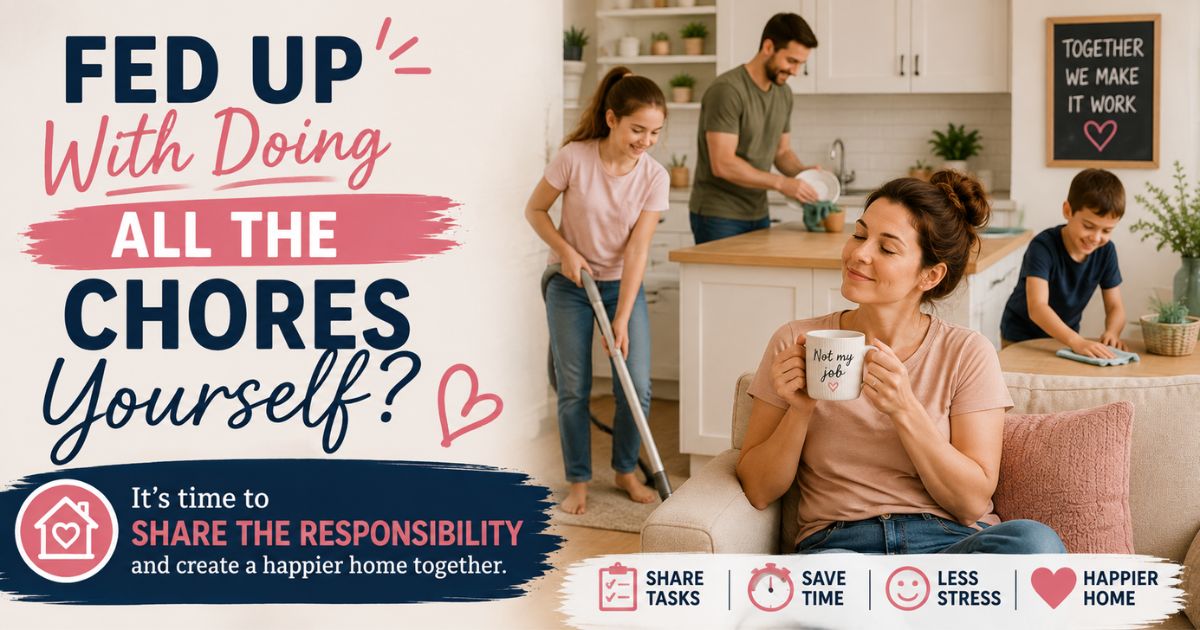
Your home isn’t just your responsibility when there are other people living there. Everyone can contribute to keeping the home clean, tidy and running smoothly with an appropriate amount of their time and effort.
Affiliate links are included for your convenience. (This means if you purchase after clicking a link I will earn a small commission which won’t cost you a penny more!) Click here to read my full disclosure and privacy policy.
What Does Assigning Chores Actually Mean?
When you look at everything that needs to happen to keep your home running, responsibility for those tasks shouldn’t automatically fall onto one person’s shoulders.
There are daily, weekly, monthly, quarterly and even yearly tasks that need to be completed around the home. Until you have some idea of what those tasks are, it can be difficult to work out who should be responsible for them.
Assigning chores means taking those household tasks and giving family members responsibility for appropriate jobs.
But there is an important difference between assigning responsibility and simply asking someone to help.
If you notice that the trash needs emptying, ask someone to do it, remind them two hours later and then check that they’ve done it, you are still managing that chore.
When someone is responsible for a chore, part of that responsibility is knowing that the task needs doing and completing it at the appropriate time.
This doesn’t mean dividing every household task equally between every person. Different ages, abilities, work commitments, school responsibilities and available time all need to be considered.
The aim isn’t to make everything equal. It’s to make running the home a shared responsibility. Need help with working out your home management checklist?
What Are the Benefits of Assigning Chores at Home?
You might think the main benefit of assigning chores is simply having fewer jobs to do yourself.
That’s certainly one benefit, but sharing household responsibilities can have a much bigger impact on your family and the way your home is managed.
It Takes the Pressure Off One Person
Running a home involves far more than physically cleaning it.
Someone is usually noticing that the laundry basket is full, remembering that bedding needs changing, realizing you’re running out of toilet paper, thinking about what’s for dinner and noticing that nobody has emptied the dishwasher.
When responsibility for all of these things falls to one person, it can quickly become overwhelming. If you are a working mom, these home management tips can help.
Sharing chores means one person doesn’t have to be responsible for doing, noticing and remembering everything.

Even small responsibilities shared between several people can make a difference.
Chores Teach Responsibility
One of the biggest things I would change if I could go back is how I approached chores with my own children.
My children didn’t really have chores.
At the time, I thought I was allowing them to enjoy their childhood without worrying about household responsibilities.
Looking back, I can see the other side of that decision.
They reached adulthood without having learned some of the basic cleaning and organizing skills they needed to manage their own homes.
Giving children appropriate chores isn’t taking away their childhood. It’s giving them opportunities to learn that being part of a household comes with responsibilities.
They learn that things don’t magically get cleaned, laundry doesn’t wash itself and somebody has to empty the trash.
These are lessons they will eventually need when they’re responsible for homes of their own.
Chores Help Build Independence
Knowing that something needs cleaning and actually knowing how to clean it are two very different things.
Children need opportunities to learn practical household skills.
That might include learning how to:
- Sort and wash laundry.
- Change their bedding.
- Clean a bathroom.
- Load and unload a dishwasher.
- Keep their bedroom tidy.
- Put belongings away.
- Look after shared spaces.
These skills build over time.
A young child might start by putting toys away while an older child can gradually take responsibility for more complicated tasks.
The aim isn’t to turn children into cleaners. It’s to teach them the skills they will need to look after themselves.
It Creates a Fairer Division of Household Work
Fair doesn’t necessarily mean equal when it comes to household chores.
Every person in your family has different commitments, abilities and amounts of available time.
What matters is that one person isn’t automatically expected to take responsibility for everything nobody else wants to do.
Having clearly assigned responsibilities makes it easier for everyone to see how they contribute to the home.
It Reduces the Mental Load
The physical act of doing chores is only part of the workload involved in managing a home.
There’s also noticing what needs doing, remembering when it needs doing, deciding who should do it and reminding people to get it done.
If you’re still responsible for all of those things, other family members might be completing tasks, but you’re still managing them.
Assigning responsibility can help reduce that mental load.
If someone is responsible for emptying the dishwasher, for example, the goal is for them to know when it needs emptying rather than waiting for you to tell them every time.
It might take time to reach that point, particularly with children, but that’s what you’re working towards.
It Helps Keep the Home Under Control
Small tasks completed regularly can prevent household jobs from piling up.
Instead of one person spending hours trying to catch up with everything, different family members can take care of their responsibilities throughout the week.
This is one of the reasons simple routines can make such a difference when you’re trying to keep your home clean.
You aren’t relying on one huge cleaning session to get everything back under control.
Chores Help Build Good Habits
Regular household responsibilities can gradually become normal habits.
Putting dirty laundry where it belongs, taking things back to the room they came from or dealing with a full trash can might seem like small things, but these habits make a home easier to manage.
The aim isn’t a perfectly clean house where everyone follows the rules all of the time.
It’s creating simple habits that reduce the amount of work needed to keep your home running. Even using cleaning caddy’s for different tasks can help by being prepared and knowing what they will need to do the task successfully.
Chores Prepare Children for Adult Life
Eventually, our children have to look after themselves.
They need to know how to wash their clothes, clean a bathroom, prepare their space and recognize when something needs attention.
These aren’t skills children suddenly develop when they move out.
Giving them age-appropriate responsibilities while they’re growing up gives them the opportunity to learn these skills gradually, make mistakes and ask for help while you’re still there to teach them.
How Do You Decide Which Chores Each Person Should Do?
This is one of the areas that can be difficult, particularly when children start comparing their responsibilities with those of other family members.
Chores aren’t necessarily going to look equal.
Some people might have more chores while others have fewer. What matters is looking at the amount of time and effort each person is reasonably able to contribute.
Consider Age and Ability
A chore needs to be appropriate for the person you’re assigning it to.
Younger children can start with simple tasks they can complete safely, while older children and adults can take responsibility for more complicated jobs.
You may need to teach someone how to complete a chore before expecting them to take responsibility for it.
Think About Everyone’s Available Time
Consider how much time each family member spends working, studying and taking part in other activities.
For example, if both parents work full-time, it might make sense for them to have a similar household workload.
An older teenager studying for important exams might temporarily have fewer chores than a younger sibling who has more free time.
It’s about looking at what’s happening in your family rather than creating a system that can never change.
Consider How Long Chores Actually Take
Counting the number of chores each person has isn’t particularly helpful.
Cutting the lawn might take considerably longer than emptying the trash.
Cleaning a bathroom isn’t equivalent to putting shoes away.
Look at the time and effort involved rather than simply trying to give everyone the same number of tasks.
Talk About Why Responsibilities Are Different
Communication is important, especially when children think someone else has an easier job.
Explain why responsibilities have been divided the way they have.
You can also ask family members which chores they prefer. Someone who hates doing dishes might happily take responsibility for vacuuming instead.
You don’t have to accommodate every preference, but allowing some choice can make it easier to create a system everyone is willing to follow.
Should Everyone Have the Same Number of Chores?
No. A fair household chore system doesn’t mean giving everyone exactly the same number of jobs.
One person’s three chores could take considerably longer than another person’s six.
You also need to consider work, school, age, ability and other responsibilities.
The aim is reasonable contribution from everyone who is capable of contributing.
It’s also important not to give every job to the person who is best or fastest at doing it.
If you’re the best at cleaning the bathroom, that doesn’t automatically mean it should always be your responsibility.
Other family members might need teaching, practice and time to learn how to do a task properly.
How Do You Get Your Family to Actually Do Their Chores?
Creating a list of chores is relatively easy. Getting everyone to take responsibility for them can be harder.
Start by making expectations clear.
Everyone should know:
- What they’re responsible for.
- How the task should be done.
- How often it needs doing.
- When it needs to be completed.
Avoid making the system unnecessarily complicated.
You don’t need an elaborate chore system that creates another job for you to manage.
A simple chart, household planner or central place where everyone can see their responsibilities might be enough.
Most importantly, give people ownership of their responsibilities.
For some families, having a simple magnetic chore chart where everyone can see their responsibilities works better than constantly reminding people what needs doing.
If you’re constantly checking, reminding and taking over, you’ll quickly find yourself managing everyone’s chores as well as your own.
There will obviously be times when children need reminders or someone needs extra help, but the long-term aim is for each person to understand and manage their own responsibilities.
Having all your household routines, schedules and responsibilities together can also make this easier to manage. My Home Management Binder is designed to help you keep the different parts of running your home organized in one place rather than trying to hold everything in your head.

When Assigning Chores Doesn’t Work
Don’t assume you’ve failed if your first chore system doesn’t work.
Sometimes the problem isn’t assigning chores. It’s the system you’ve created around them.
Perhaps you’ve given everyone too much to do.
Maybe responsibilities aren’t clear enough.
Someone’s circumstances might have changed and they genuinely don’t have enough time.
Or perhaps you’ve created such a complicated chore chart that nobody wants to use it.
Look at what’s causing the problem and adjust the system.
Home management systems need to work for the people living in the home. If something isn’t working, changing it doesn’t mean you’ve failed.
It means you’re creating a system that better fits your family.
Start Sharing the Responsibility of Your Home
You don’t have to completely reorganize your household overnight.
Start by writing down the tasks that regularly need doing around your home.
Then talk to the people you live with about how those responsibilities could be shared.
Assign a few responsibilities, make sure everyone understands what’s expected and give the system time to work.
You can always adjust it as your family’s needs change.
The biggest benefit of assigning chores isn’t creating a perfectly clean home.
It’s recognizing that keeping a home running shouldn’t automatically be one person’s responsibility.
When everyone contributes what they reasonably can, you’re not just sharing chores. You’re creating a home that everyone has a part in looking after.er sibling. The most important thing is communication .