Simple Coat Closet Organization: 6 Steps To A Functional Entryway


The entryway closet is often the most cluttered space. Everything gets dumped in there: shoes, coats, bags, and often other things too. What you need is a simple coat closet organization session that tackles the clutter without taking up the whole day.
This closet isn’t just about making the most of the space. It’s also about creating order in the morning. Who wants to dig through a pile of shoes looking for the missing sneaker?
Tips for clothes storage are all well and good, but what works in a bedroom closet doesn’t always work in a coat closet.
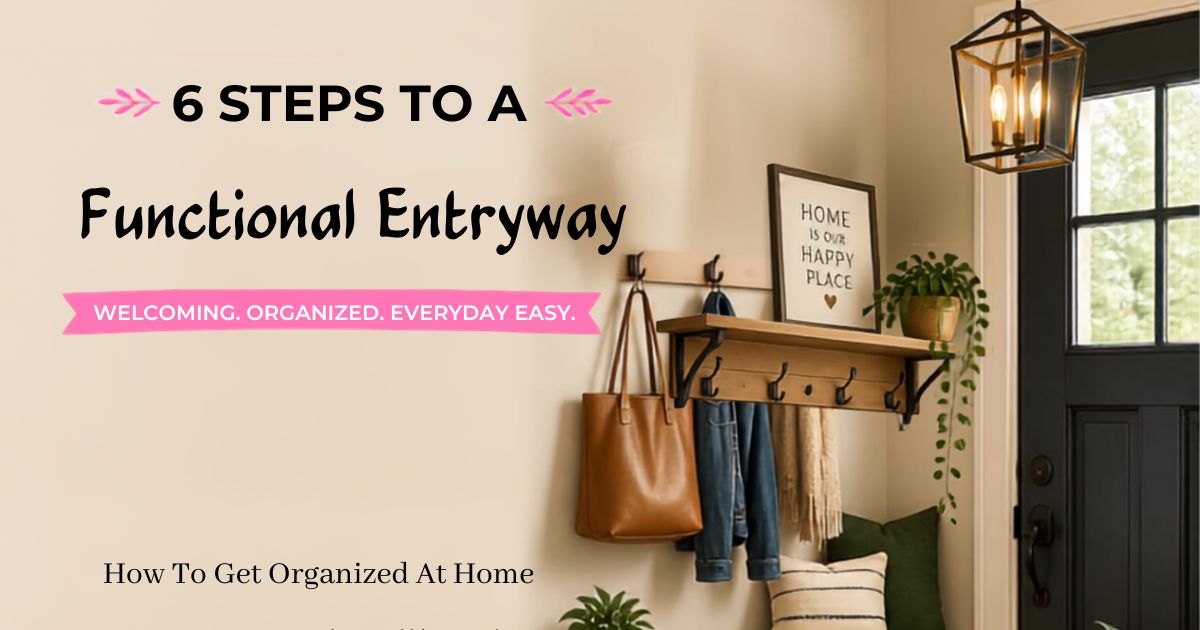
You don’t need an expensive custom-built closet with zones for every item, especially when some of those zones may sit empty. All you need is a quick decluttering session and a few adjustments to your current setup, making the most of the space available, including the vertical space.
Affiliate links are included for your convenience. (This means if you purchase after clicking a link I will earn a small commission which won’t cost you a penny more!) Click here to read my full disclosure and privacy policy.
Step 1: Clear, Audit, And Edit
This is something I seldom suggest doing because it goes against my grain, but a small coat closet really does need to be emptied completely. We need a blank canvas to start with, and you will be surprised at what is hiding in there too.
Group the items together by category and person. So, all the coats for one person go together, and all their shoes sit next to their coats. This means you’re grouping items not only by category but also by person.
If you need a little help deciding what should stay and what needs to go, I’ve got a simple guide to help you declutter your closet fast.
The items you find that don’t belong in the coat closet need to go to their respective homes elsewhere. Holiday decor, linen and cleaning supplies don’t belong in the coat closet.
Go through each item and decide whether it gets to stay. We don’t want items that don’t fit or are worn out. Donate them to charity, sell them, or throw them away.
Have a one-season rule for your closet too. Only items for the current season are allowed in the closet.

Keep a donation bag nearby: Having a reusable donation bag ready makes it easier to remove items as you declutter. When something no longer fits or is no longer needed, it has somewhere to go instead of being put back in the closet.
Step 2: Choose Sturdy Hangers For Heavy-Duty Coats
If you have a rail to hang coats on, ditch the fancy coat hangers you use in your bedroom closet and invest in some sturdy hangers that can support the weight of big winter coats. Look for: sturdy hangers with a wide shoulder shape that can support heavier coats without bending.
It doesn’t matter if it’s summer; changing coat hangers with the season is impractical.
Choose thick plastic or wooden ones, but they should all be sturdy enough to support heavier coats.
If you don’t have a rail and just have hooks, you will need to limit the number of coats each person keeps in the closet.
If you have young children, consider placing some of the hooks lower down. This makes it easier for them to put their own things away.
Step 3: Tame The Accessories With Baskets And Labels
Don’t automatically go for clear baskets. You might be able to see what’s inside, but so will everyone else who comes into your home. Opaque baskets can help keep the closet looking less cluttered.
Either assign one basket per person or one basket per category.
The most important step is to label each basket, either with the category or the person’s name. I use this label maker all the time. This ensures everyone knows where to put things when they take them off.
For out-of-season items, think vertical storage. Put them in boxes with lids to keep them clean, labeled, and out of the way until they are needed.
If you have space, this is the perfect place to store out-of-season outdoor clothing. Otherwise, you will need to find space in another area of your home for the items that can’t stay here.
If you’re working with a particularly small closet, you’ll find more ideas in my guide to small closet organization.
Step 4: Reclaim Floor Space With Smart Shoe Storage
Shoes can be the worst. They accumulate quickly, especially if each person has more than one or two pairs.
Try to limit the number of shoes each person keeps in the coat closet. Spares can go in bedrooms.
If your family isn’t naturally neat and tidy, trying to force everyone to line up their shoes in a certain way is going to cause problems. If this sounds like your family, you just need a basket. You could have one for each family member, although this might take up more space, or use one basket for everyone’s shoes.
If you’re the neat and tidy type of family, I wish I had one of those! You can use a shoe cabinet or shoe cubbies. Having a boot tray somewhere to put wet shoes and boots will help keep water off the closet floor.
Step 5: Maximizing ‘Hidden’ Space – Doors And Walls
The back of a closet door is an amazing storage opportunity. Check how much room you have, as this will help determine what you can store there.
Ideas for using the backs of the door:
- Hooks for bags, with different heights for different family members.
- Pocket storage for small items like gloves and socks. Many people keep socks next to their shoes because that’s when they need them.
- Over-the-door shelving is perfect for smaller items that might otherwise get lost, from keys and sunglasses to dog leads.
If you have wall space, adhesive hooks can give you even more storage. They can be used for bags, umbrellas, and even sports bags.
Step 6: How To Maintain The System After Each Season
When the weather changes, it’s time to make seasonal changes in your coat closet. Winter coats and boots can be stored away, while sun hats and sandals come out.
A weekly reset will help you keep on top of the entryway closet. This could become someone’s weekly task, helping to make sure everyone is doing their bit to keep the closet tidy. You could even rotate the responsibility so everyone gets a turn.
It won’t take long to reset each week, and it’s a great way to remind everyone that they have responsibilities around the home.
This is also an easy task to add to your Home Management Binder, especially if you use it to keep track of regular household responsibilities.
Don’t forget to keep a donation bag in the closet. Anyone can add items when they no longer fit or are no longer needed.
If you like the idea of using a weekly reset to keep on top of household tasks, you can see how I use a weekly kitchen cleaning checklist to break those tasks down into manageable jobs.
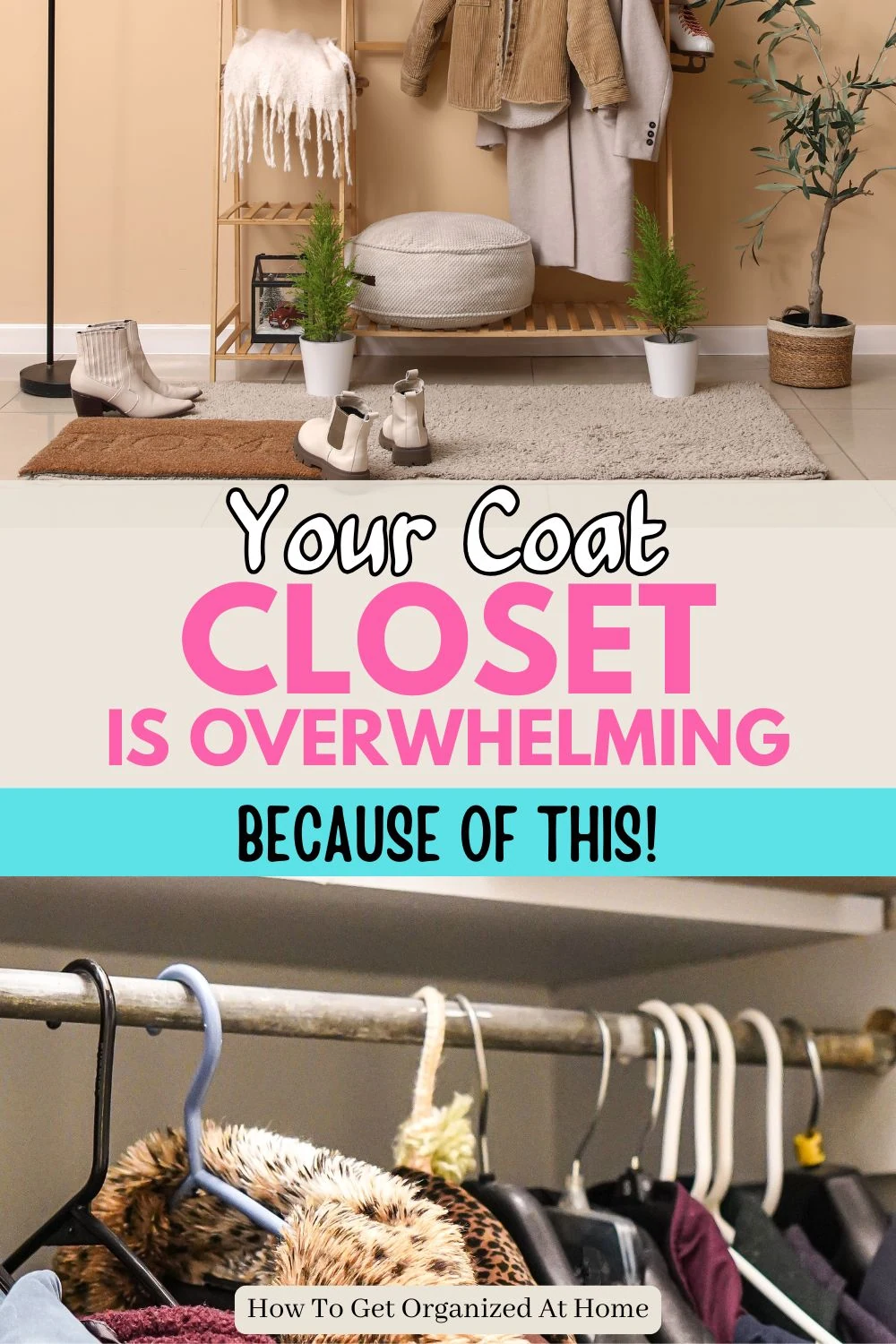
Keep Your Coat Closet Simple
This really is a simple system. Once it’s set up, it should only take a few minutes each week to reset, with a little more time needed a couple of times a year when you change things over for the new season.
It’s not a complicated system, and that’s the point. The easier your system is to follow, the more likely it is to keep working, even on your busiest days.
Remember to:
- Start by completely emptying the closet.
- Declutter and remove anything that isn’t for the current season or doesn’t fit.
- Create designated places and label them so everyone knows where things belong.
- Make the system work for you and your family.
More Closet Organization Ideas
If you’re working on other closets and storage areas around your home, you might also enjoy:
- Renter Friendly Closet Systems That Don’t Require A Drill
- Easy Clothes Storage Without A Closet
- 19 Closet Organizing Ideas For Busy Moms