How To Stop Clutter From Building Back Up After You Declutter


You finally do it. The cupboards open smoothly, the surfaces are clear, and you can actually find what you need without digging through piles first. For a while, everything feels lighter.
Then life happens. Shopping bags come home, post lands on the counter, children bring things in, and holidays roll around. Random items appear out of nowhere, and before you realise it, clutter starts creeping back in. Simply stop clutter from building back up using these tips.
If you’ve ever looked around and wondered, “How is this happening again already?”, you are far from alone. These simple ideas to declutter your home will transform how you manage clutter in the future.
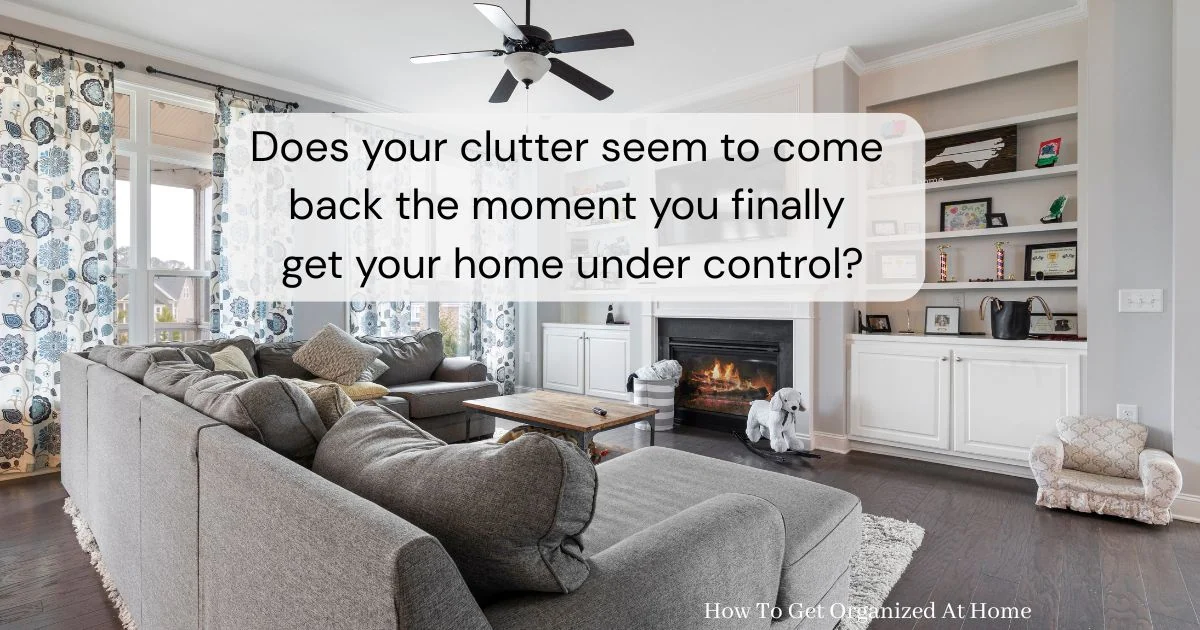
Decluttering isn’t a one-and-done task; it requires gentle, ongoing maintenance. The good news? Maintaining your progress is significantly easier than creating it from scratch.
If you’re still at the stage where clutter feels completely overwhelming, my 7-Day Decluttering Jumpstart gives you a simple daily plan to help you clear your home one manageable step at a time. Once you’ve created that foundation, these habits will help you keep the clutter from creeping back.
Affiliate links are included for your convenience. (This means if you purchase after clicking a link I will earn a small commission which won’t cost you a penny more!) Click here to read my full disclosure and privacy policy.
Why Clutter Always Finds A Way Back
Clutter rarely returns in one big wave. It builds up the exact same way it did originally: one item, one surface, and one decision delayed until “later.”
When life gets busy, things get set down with every intention of dealing with them eventually. The trouble is that “later” easily stretches into weeks or months. That doesn’t mean you’ve failed or that you’re back at square one—it just means you are living in your home. The goal was never to banish items forever, but simply to stop them from quietly taking over again.

Follow The “One In, One Out” Rule
You don’t need to apply this rigidly to everything, but it works wonders for high-volume areas. The premise is straightforward: when something new enters your home, an older item leaves.
- Buying a new jumper? Donate one you no longer wear.
- Replacing kitchen gear? Let go of the broken or redundant tool hiding in the back cupboard.
This simple check-and-balance keeps you mindful of what enters your space and prevents gradual build-up over time. I have velvet coat hangers, I won’t buy any more, if I run out something has to go.
Keep A Permanent Donation Bag
This is one of the easiest habits to set up. Place a dedicated bag or box in an accessible spot, such as:
- Inside your primary wardrobe
- The utility room
- A hallway cupboard
Whenever you stumble across an item you no longer use or want, drop it straight into the bag—no need to schedule a formal decluttering session or make a massive project out of it. Once the bag fills up, drop it off at a donation center and start fresh.
I keep a sturdy reusable bag in my closet so I can drop items into it as I need to get rid of items, instead of doing a massive decluttering session. These are similar to the bags I use.
If you find yourself hesitating over what belongs in your donation bag, you’re not alone. Making those decisions can often be the hardest part. My guide on how to decide what to keep when decluttering will help you sort through your belongings with more confidence.
Declutter In Small, Regular Bursts
Waiting until your space feels overwhelming usually forces you to start from scratch. Instead, treat decluttering like routine home maintenance—ten minutes every few days will save you hours down the line.
Try quick reset actions like:
- Sorting through a single drawer
- Clearing off one shelf
- Running a 5-minute room reset
- Emptying the basket that tends to catch daily clutter
Small, frequent check-ins stop minor messes from snowballing. Setting a timer for just five or ten minutes often makes it much easier to get started.
Check out this article on having a daily routine for your cleaning.
Watch Out For Clutter Hotspots
Most homes have predictable dumping grounds: the kitchen counter that collects mail, the bedroom chair covered in clothes, or the entryway console table.
Pay attention to where items naturally pool up. These hotspots offer valuable clues about where your home’s systems might be failing. Perhaps those items lack a designated spot, the current storage is inconvenient, or things are being left where they’re dropped rather than where they belong. Fixing just one hotspot can create a surprising ripple effect throughout the entire house.
Once you’ve created a home for something, adding a simple label makes it much easier for everyone in the house to put things back where they belong. This is the label maker that I love and use all the time.
Check out these 10 tips on how to deal with clutter, it might inspire you to put some in place.
Remember Why You Decluttered In The First Place
When life gets full and clutter begins to creep back, it’s tempting to brush it off for another day. When that happens, gently remind yourself how your home felt before: the underlying friction, the visual noise, and the decision fatigue.
Then contrast that with how it felt right after you made progress: calm spaces, clear surfaces, and an effortless daily routine. That peace of mind is worth protecting with a few small habits.
If you’ve ever wondered why decluttering can leave you feeling mentally drained, even when you’re making progress, there’s a good reason. Read why decluttering feels so emotionally exhausting to understand what’s happening and how to make the process feel a little easier.
How To Maintain A Clutter-Free Home
Items will always move through your home; life changes, needs shift, and things naturally accumulate. The goal isn’t perfection or a home that looks completely untouched. It’s simply building the awareness to catch clutter before it takes over.
If you’re working on creating better home routines, my Home Management Binder can help you keep track of cleaning tasks, decluttering projects and household routines all in one place.
You don’t need another overwhelming weekend overhaul. Success comes down to small, consistent choices: one drawer, one shelf, and one donation bag at a time.
And if you’re still working toward that first clutter-free home, my 7-Day Decluttering Jumpstart will walk you through exactly what to tackle each day, so you can make real progress without the overwhelm.