Renter Friendly Closet Systems That Don’t Require a Single Drill


If you’ve already tried the hacks and you’re still standing in front of your closet feeling like nothing is actually working, I want you to know that’s completely normal. Hacks buy you time. A proper closet system actually solves the problem. Let’s think about renter friendly closet systems and hacks and what is the better option.
The difference is this: a hack is a workaround. A system is a setup that works the same way every single day, without you having to think about it. These tips for clothes storage are varied, depending on what you need and what space you have available.
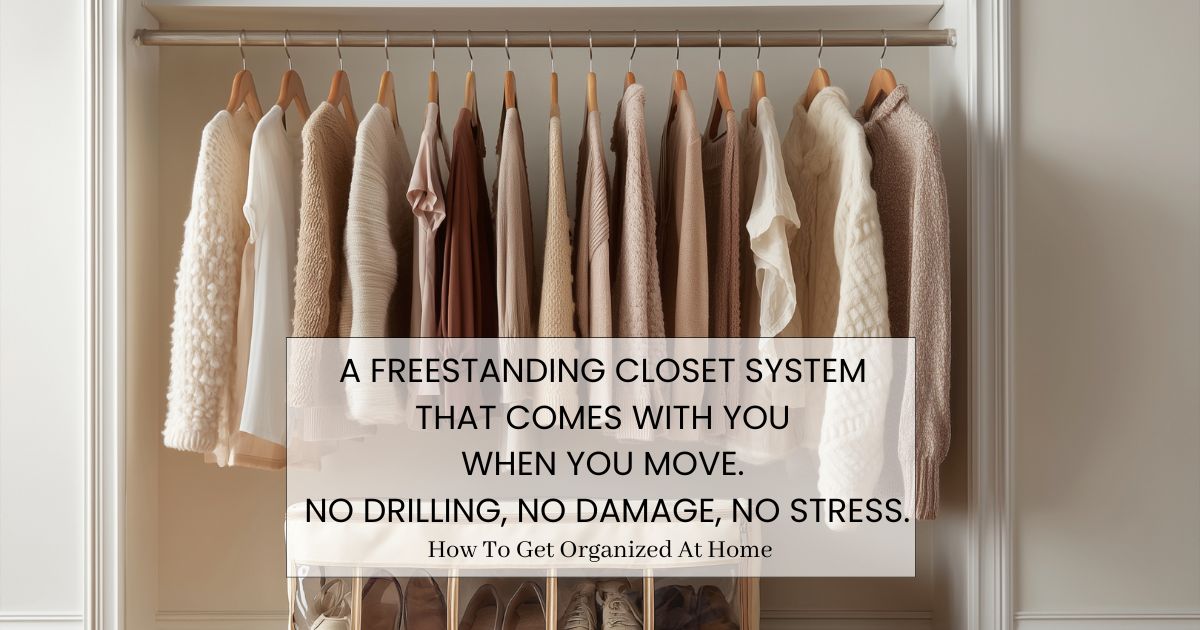
And the good news is that as a renter, you can absolutely have one. You just need to know what to look for.
Affiliate links are included for your convenience. (This means if you purchase after clicking a link I will earn a small commission which won’t cost you a penny more!) Click here to read my full disclosure and privacy policy.
What Actually Makes a Closet System Renter-Friendly?
Before we get into specific products, it helps to know what you’re actually looking for. Not every “closet organizer” you’ll find online is suitable for renters, so here’s the filter I’d apply to anything you’re considering.
A genuinely renter-friendly closet system will be:
- Freestanding. It holds itself up without being attached to walls, ceilings, or floors.
- Modular. You can add to it, rearrange it, or scale it back depending on your space.
- Moveable. When your lease ends, it comes with you and fits into your next home just as well.
- No tools required. Or at the very least, no drilling.
If a system ticks all four of those boxes, you’re on the right track. If it needs to be bolted to a wall, put it back on the shelf.
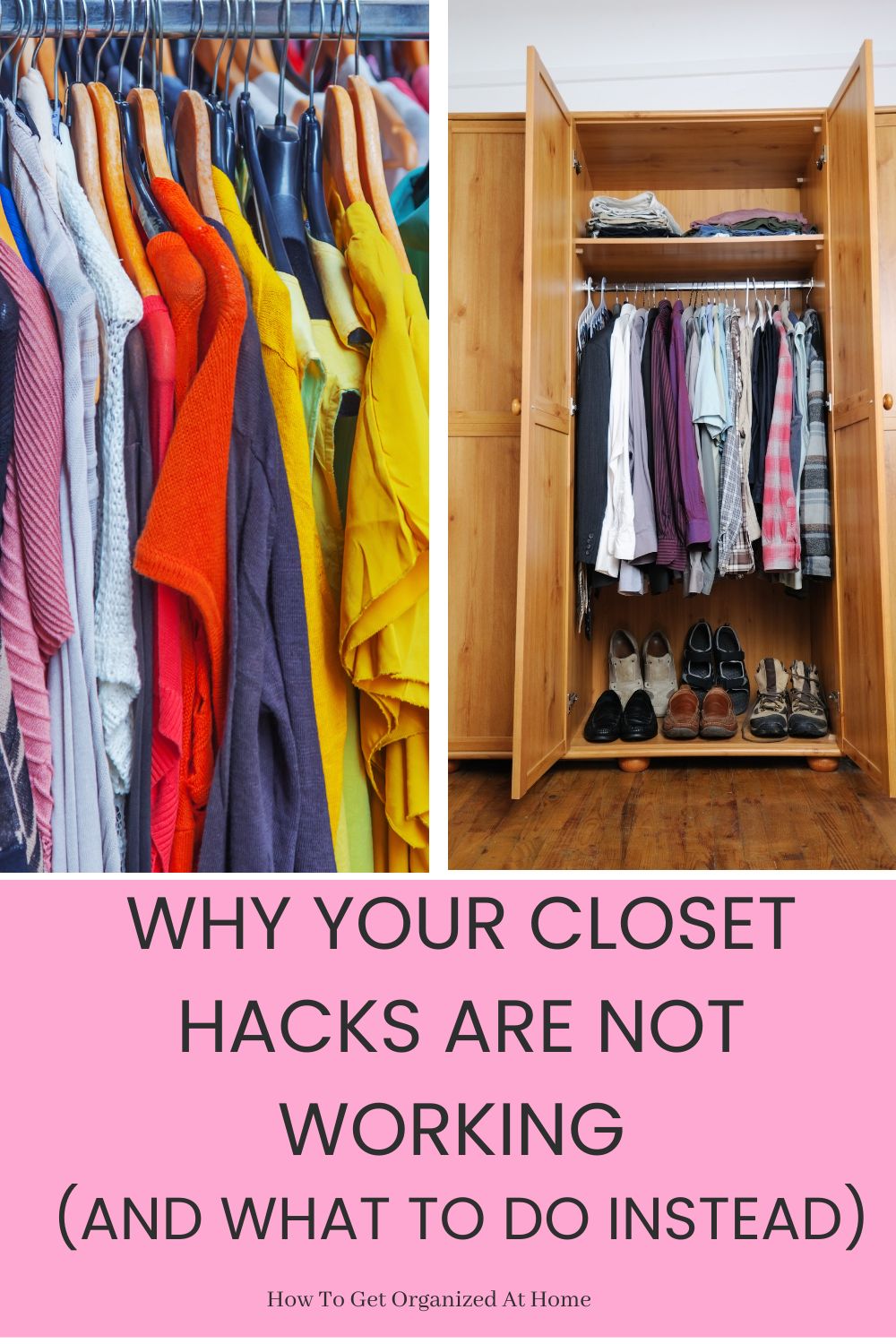
Freestanding Pole and Rail Systems
This is the category that tends to get the most attention, and for good reason. A freestanding rail system gives you full hanging space without touching a single wall.
Tension pole wardrobes are a brilliant option if you have a closet with a wall you can brace against. You extend the poles until they press firmly between the walls, and they hold the whole structure in place using pressure alone.
Speaking of garment racks: if your closet has a decent amount of floor space, a freestanding garment rack. You can get them with a lower shelf or shoe rack built in can double your hanging capacity instantly. I know they’re not glamorous, but a good quality one in a matching finish to your other furniture looks perfectly fine. Nobody is judging your closet as harshly as you are.
Best for: Renters with floor space to spare and a lot of hanging items like dresses, shirts, and jackets.
Modular Cube and Shelf Systems
If folded clothes, bags, or kids’ things are your main challenge, a modular cube system is probably going to change your life more than a rail will.
Cube organizers are the unsung heroes of rental living. These other cube organizers are great as you can stack them, place them side by side, or configure them around an existing rail. Some come with fabric drawer inserts, which is useful if you’d rather not see the contents of every cube at once. They’re also great for children’s rooms because the cubes are at a reachable height and kids can actually put things away themselves, which is a small miracle when you’re tired.
What I love about this type of system is that it grows with you. If you move into a bigger place, you add more cubes. If you downsize, you leave some in storage. It’s flexible in a way that a built-in wardrobe will never be.
Best for: Renters who have more folded items than hanging items, or who need a system that works for kids’ clothes too.
Renter Friendly Closet Shelves
If the wire shelving in your rental closet is driving you up the wall (and if you’ve ever watched a pile of jumpers collapse through the gaps, you’ll know exactly what I mean), there are a few shelf solutions that don’t require you to touch a single wall.
Freestanding shelf units are the simplest answer. A narrow stackable shelf unit placed inside your existing closet gives you far more usable storage than a single wire shelf ever will. Look for something around 30cm deep so it fits comfortably inside the closet without blocking the rail.
Stackable storage boxes are another underrated option for the top shelf. Rather than trying to balance folded items on a narrow wire surface, clear stacking boxes keep things visible and contained. I use these for seasonal items, spare bedding, and anything that doesn’t need to be accessed every day.
And if you’re stuck with wire shelves for now and not ready to invest in anything new, try my favourite free fix: cut a piece of sturdy cardboard to fit over the wire, wrap it in contact paper, and lay it flat. It creates a solid surface for stacking in about ten minutes. It’s not permanent and it’s not pretty, but it works.
If you aren’t into DIYing anything then how about these wire shelf covers? They are simple to install and look amazing, and you can take them with you if you move.
Best for: Renters who want more shelf space without installing anything, or who are fed up with wire shelving.
How to Choose the Right System for Your Closet Size
Not every system suits every space, so here’s a quick guide depending on what you’re working with.
Small closet (single rail, one shelf, not much depth) Focus on maximising vertical space. A slim freestanding shelf unit beside or beneath the existing rail, combined with shelf dividers to keep folded piles upright, will do more for a small closet than almost anything else. If you want more inspiration for making a tiny footprint feel twice as big, I’ve pulled together my favourite Small Closet Organization Ideas That Actually Work.
Medium closet (double rail or walk-in with basic fittings) This is where a modular cube system really shines. You can use the existing rail for hanging and add cubes along the floor or on a low shelf unit for everything else. A tension pole system works well here too if you have a section of the closet that has no existing rail.
Large closet or walk-in You have enough space to combine systems. A garment rack or tension pole setup for one section, cubes or a shelf unit for another, and a dedicated area for shoes and accessories. The key is keeping each zone for one category so you always know where to look.
What to Check Before You Buy
A few things worth confirming before you spend any money:
Weight limits. Freestanding systems vary a lot in how much they can hold. If you’re planning to load a unit with heavy jumpers or jeans, check the weight rating before you buy.
Adjustability. The best systems let you move shelves up and down as your storage needs change. If you have children, this matters even more because their storage needs shift constantly.
Assembly. If it comes flat-packed, check whether it needs tools or goes together by hand. Tool-free assembly is worth looking for if you’re moving frequently.
Pack-down size. Think ahead to your next move. A system that disassembles flat is always going to be easier to transport than one that stays rigid.
Keeping Your System Working Long-Term
A closet system only stays useful if it stays manageable. The biggest mistake I see is people buying a beautiful system and then filling every single space in the first week. Leave a little room in each section so there’s somewhere for things to land when life gets busy.
Doing a quick seasonal switch-out is one of the easiest ways to keep your closet system from getting overwhelmed. If you’re not sure how to approach that, the guide on Small Closet Tips for Swapping Out Clothes Seasonally walks you through it step by step.
And if the closet itself still feels like the problem, it’s worth knowing that some of the best storage solutions don’t involve a closet at all. If that sounds like your situation, take a look at my article on how to organize without a closet.
Ready to Build Your System?
You don’t need to overhaul everything at once. Pick the one area of your closet that frustrates you the most and start there. For most people that’s either the shelf situation or the lack of hanging space, so that’s a good place to begin.
If you’re still at the “just trying to get it under control” stage before investing in a full system, start with the Renter-Friendly Closet Organization Hacks That Actually Work first. And once you’re ready to take it further, come back here.
Here are a few more articles to help you keep going: