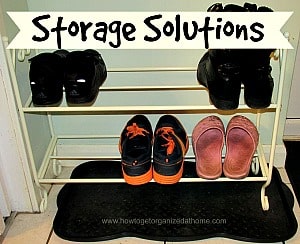
How To Declutter Your Closet Fast (Even If You’re Short On Time)


Do you feel that a closet declutter is going to take too long because you are already stretched to the limit? We often think closet decluttering is about fashion or aesthetics, but neuroscience suggests it is actually about focus.
When you open an overflowing closet, you aren’t just looking for a shirt; you are forcing your brain to process “competing stimuli.” Research led by Dr. Sabine Kastner at Princeton University found that an environment crowded with objects reduces the brain’s ability to focus and process information. In short: an overflowing closet is a literal drain on your mental energy before your day has even begun.
I will show you how to declutter your closet fast, not by clearing a weekend, but by recovering your “neural resources” in 10-minute sprints. By breaking this down into manageable sessions, you manage the mess without triggering the decision fatigue that leads to burnout.
Affiliate links are included for your convenience. (This means if you purchase after clicking a link I will earn a small commission which won’t cost you a penny more!) Click here to read my full disclosure and privacy policy.
Strategy: Micro sessions Vs. Goal Procrastination
When we set “lofty goals”, like “I will clean the whole closet this weekend”, we often trigger a procrastination response. We wait for a “perfect” block of time that never arrives, leading to a cycle of guilt and inaction.
To bypass this, we move from Outcome Goals (the finished closet) to Process Sprints (the 5-minute timer). This strategy works for two reasons:
- Lowering the Barrier to Entry: According to the Zeigarnik Effect, the human brain remembers uncompleted or interrupted tasks better than completed ones. By simply starting for 5 minutes, you create a “mental itch” that your brain will want to finish later, effectively beating procrastination through momentum.
- Protecting Neural Resources: By committing to only 5 or 10 minutes, you prevent Decision Fatigue. You stop before your “mental battery” drains, ensuring that the choices you make during that window are sharp and decisive.
How to Execute a “Process Sprint”:
- Set a Hard Stop: Set a timer for 5 minutes. When it dings, you stop, even if you feel like keep going. This builds the “consistency muscle” and prevents the burnout that makes you avoid the closet tomorrow.
- Implementation Intentions: Don’t just “plan” to declutter. Use an “If-Then” plan: “If I am waiting for my coffee to brew, then I will declutter one shoe rack.” —
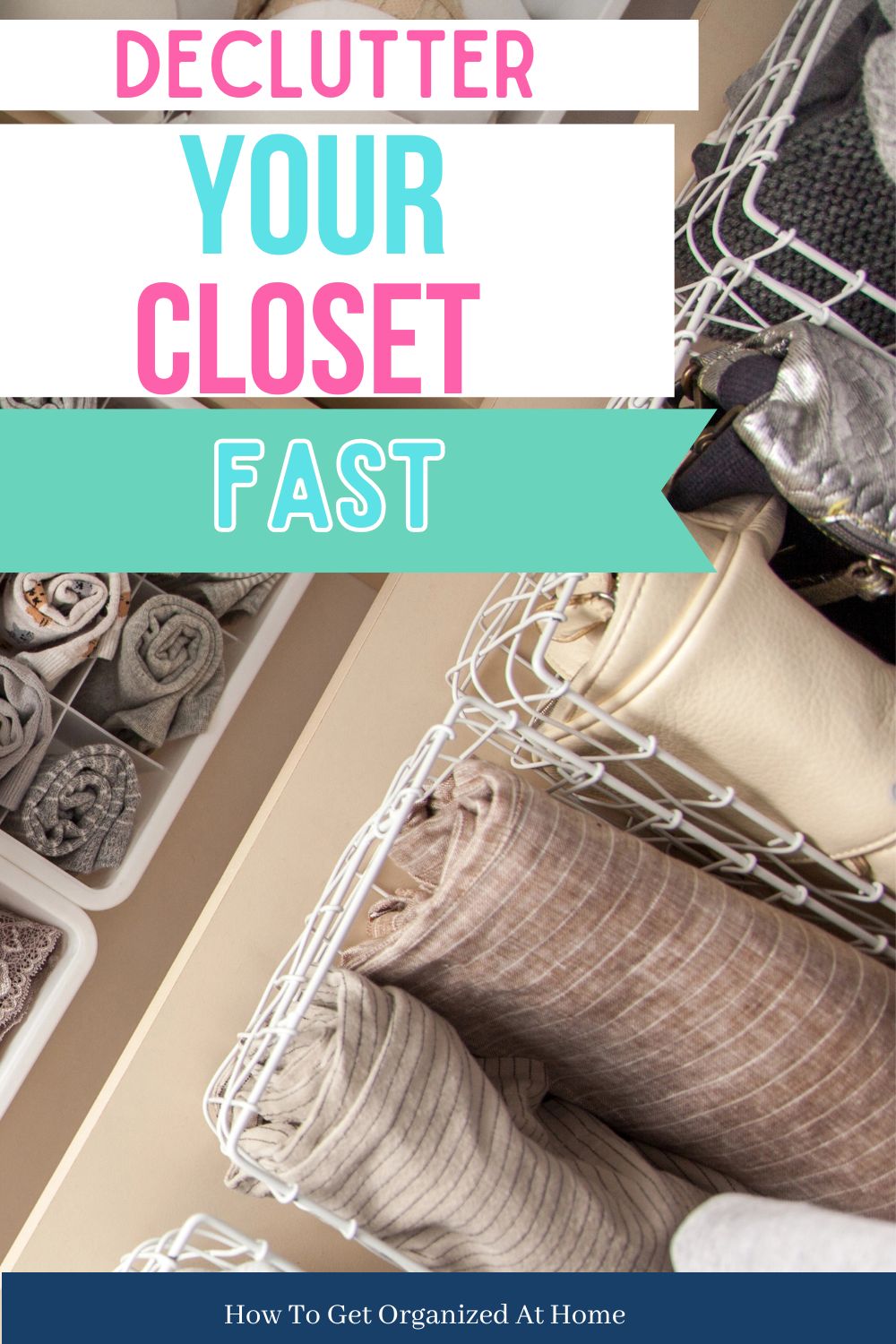
The “High-Impact” Sequence: Decluttering By Visual Volume
If we follow the Princeton principle that “more objects = more brain work,” then the fastest way to “quiet” your mind is to remove the largest “visual competitors” first.
Don’t just grab random items. Follow this High-Impact Sequence to reduce your cognitive load in 5-minute sprints:
1. The “Floor & Foundation” (Max Visual Noise)
The floor is the largest surface area in your closet. When it’s covered in shoes, bags, or “floordrobe” piles, your brain cannot find a focal point.
- The Sprint: Clear the floor entirely.
- The Logic: Emptying the floor provides an immediate “reset” for the visual cortex, making the rest of the closet feel manageable rather than overwhelming.
2. The “Outerwear & Bulk” (Volume Reduction)
Coats, blazers, and bulky sweaters take up the most physical and visual space per hanger.
- The Sprint: Pull out every coat. If you haven’t worn it this season, move it to storage or donation.
- The Logic: Removing 5 bulky coats creates more “white space” on a rack than removing 20 t-shirts. This creates a psychological “win” through immediate visual expansion.
3. The “Uniform” (Decision Streamlining)
T-shirts and trousers are your “daily drivers.” These usually have the most duplicates.
- The Sprint: Choose one category (e.g., just black t-shirts).
- The Logic: By narrowing your focus to one sub-category, you reduce the “competing stimuli” Dr. Kastner describes. You aren’t deciding between a dress and a sock; you are only comparing like-for-like.
4. The “Intimates & Accessories” (The Detail Work)
Socks, underwear, and scarves are small but high-density. They create “micro-clutter” which is visually “jittery.”
- The Sprint: Save this for last.
- The Logic: These require the most “micro-decisions.” Tackle these only after you have cleared the “Visual Volume” from steps 1-3 and your brain has more “neural resources” to handle the details.
The 3-Second Filter: How to Decide at Warp Speed
The reason closet decluttering usually takes hours is “Decision Fatigue.” You spend too much time negotiating with your clothes. To move fast, you need to stop asking “Do I like this?” and start using a binary logic gate.
Use this 3-Second Flowchart for every item you touch:
- The Utility Gate: Have I worn this in the last 12 months?
- No? → Donate. (If you didn’t wear it through four seasons, you won’t wear it for the fifth).
- Yes? → Move to Gate 2.
- The “Ready-to-Wear” Gate: If I had a lunch date in 20 minutes, could I put this on right now?
- No (Needs repair, needs ironing, doesn’t fit)? → Out. You aren’t “short on time” if you’re keeping a wardrobe full of chores.
- Yes? → Move to Gate 3.
- The “Full Price” Test: If I were in a store right now, would I pay full price for this item again?
- No? → Donate. You are keeping it out of “Sunk Cost Fallacy,” not because it adds value to your life.
- Yes? → Keep.
The Neuroscience Of The “Full Closet”
Research led by Dr. Sabine Kastner at the Princeton Neuroscience Institute found that the more objects present in your visual field, the harder your brain has to work to filter them out. This process, known as “Neural Competition,” occurs because our visual system has a limited capacity to represent multiple stimuli at once.
When your closet is overflowing, every item acts as “Competing Stimuli.” Your brain must use “top-down” mental energy to ignore the 80% of clothes you don’t wear just to find the 20% you do. This constant, unconscious filtering causes the brain to tire over time—a phenomenon that significantly reduces your ability to focus on more important tasks later in the day.
The Cognitive Benefit of Decluttering: An overflowing closet isn’t just an aesthetic problem; it’s a cognitive drain. By removing the excess, you aren’t just cleaning, you are physically reducing the workload on your Visual Cortex. This allows you to see what you actually own with much higher clarity and preserves your “neural resources” for the day ahead.
The “No-Try” Rule: Defeating Decision Fatigue
One of the biggest mistakes in closet decluttering is turning a 5-minute sprint into a “try-on session.” This is a trap that leads to what organizers call the “Mid-Project Mess”, where your bed is covered in clothes, your energy is gone, and you end up shoving everything back into the closet in frustration.
To maintain “warp speed,” you must separate Sorting from Styling.
The 3-Second Logic Gate
Instead of physically putting on every garment, use these three binary questions to filter your items. If you can’t answer “Yes” within three seconds, the item is moved to the “Probationary Box.”
- Immediate Utility: Would I wear this today, in my current state and for my current schedule?
- Historical Evidence: Have I worn this in the last 12 months? (If it survived four seasons without being touched, it is no longer part of your active wardrobe).
- The Re-Purchase Test: If I saw this in a store right now, would I spend money on it again?
Why this works (The Sunk Cost Fallacy)
We often keep clothes because we feel guilty about the money we spent. This is known in economics as the Sunk Cost Fallacy. By asking “Would I buy this again?”, you shift your perspective from losing an old item to choosing a new one.
When to actually try things on:
Only items that pass the three questions but have a “fit” uncertainty go into a small “5-Minute Fit” pile. Tackle this pile at the start of a different day when your mind is fresh and your “neural resources” are at their peak.
The Disposal Hierarchy: Ensuring a Permanent Exit
A “fast” declutter is a failure if the clutter simply moves from the closet to the hallway. To be successful, you must have a system to move items out of the house immediately.
While researchers via Science Direct have noted that “clutter” is often a subjective perception, their findings suggest a clear negative impact on well-being, specifically regarding the frustration of “searching” and the social embarrassment of “perceived mess” (Cisneros, 2021). When we leave bags in the hallway, we aren’t just delaying a chore, we are extending the psychological weight of the clutter.
To protect your “neural resources” and ensure your 5-minute sprint results in a permanent win, use this 24-Hour Disposal Hierarchy:
| Priority | Category | Destination | The “Fast” Rule |
| 1. The “Trash” | Ripped, stained, or “expired” (elastic-gone) items. | Textile Recycling | If you wouldn’t give it to a friend, don’t give it to a charity. Find a local “Rag Bin.” |
| 2. The “Hero” Items | High-quality professional wear (suits, blazers). | Dress for Success | These items have high “social ROI.” Get them out fast to someone who needs them for an interview. |
| 3. The “Volume” | Standard daily wear in good condition. | Local Thrift/Charity | Do not overthink this. Choose the closest drop-off point to your house to minimize “friction.” |
| 4. The “Resale” | Luxury/Designer items worth >$25. | Consignment / Apps | The 48-Hour Clock: If you haven’t photographed and listed it within 48 hours, it drops to Priority 3. |
Overcoming Decision Fatigue & Decluttering Burnout
Decluttering is a high-stakes cognitive activity. Every item you touch requires you to navigate emotional attachment, memories, and guilt. This leads to Ego Depletion—a psychological state where your willpower and ability to make sound decisions are physically exhausted.
This is why “marathon” decluttering sessions often fail. When you empty your entire closet onto your bed, you quickly run out of “mental fuel.” By the time you reach the most difficult decisions, you are exhausted, leading to the “shove it all back in” effect.
The Fix: Short, focused “Microsessions” are scientifically more effective because they stop before you reach the point of decision fatigue. Celebrating a 10-minute win isn’t just “feel-good” advice; it’s a way to reinforce a positive feedback loop in your brain, making you more likely to return to the task tomorrow.
The 5-Minute Closet Reset: Habit Stacking for Maintenance
Decluttering is a process, not a one-time project. To prevent the “rebound effect,” implement a 5-Minute Reset using Habit Stacking—pairing a new habit with an existing one (like tidying a shelf while your morning coffee brews).
But what if you hate using a closet, are there alternatives? Easy clothes storage without a closet is the best place to start.
Weekly Maintenance Hit-List:
- The Hanger Audit: Fix any twisted hangers to reduce “visual noise.”
- The “One-In, One-Out” Rule: If you decide you don’t like an item while getting dressed, move it to your donation bag immediately.
- Shelf Leveling: Straighten one pile of clothes to restore visual symmetry.
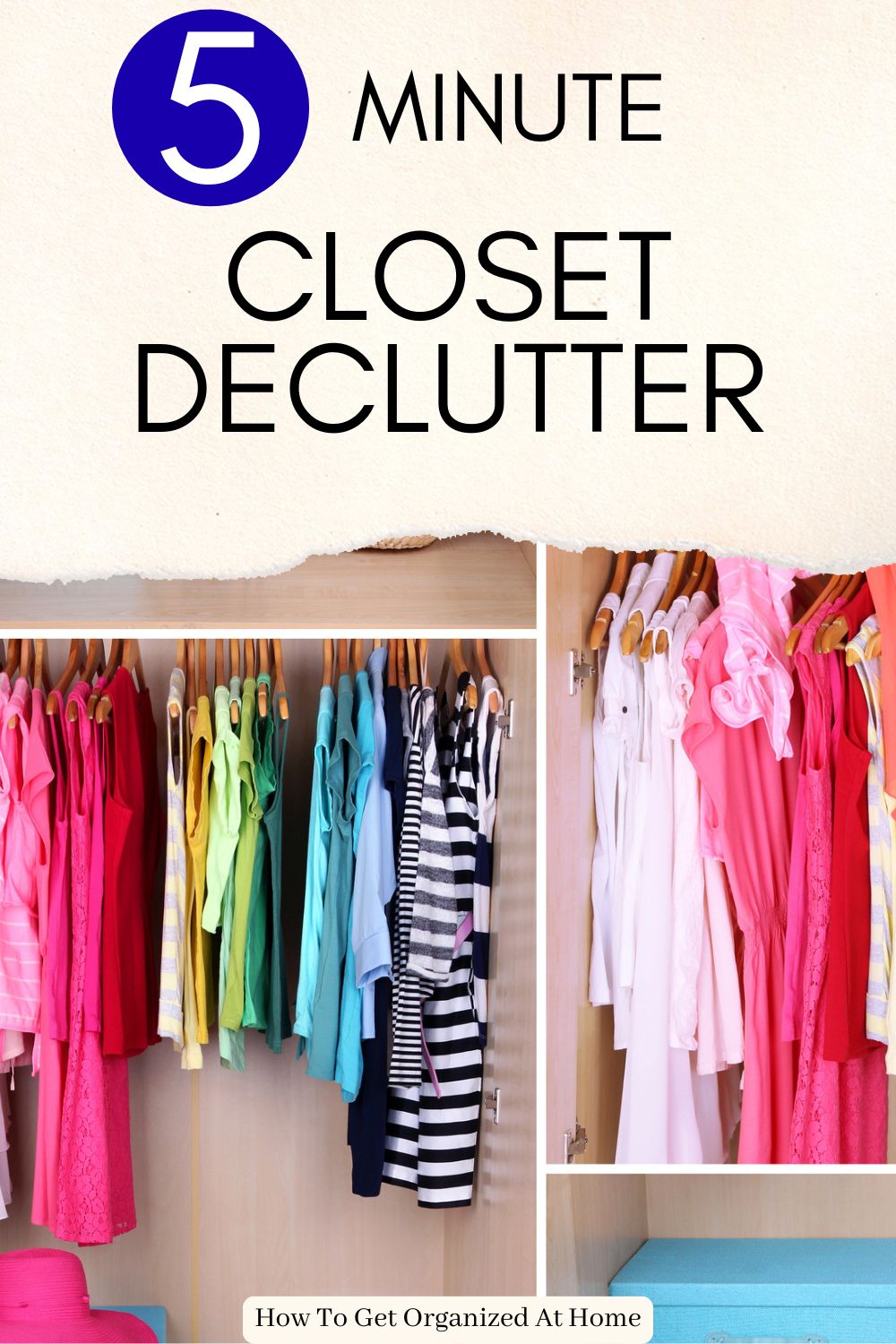
You Don’t Need a Free Weekend; You Need a Start
You don’t need a 48-hour window to reclaim your space. By applying the Princeton research on visual focus and the UCLA findings on stress reduction, you can transform your closet, and your mental clarity, 5 minutes at a time. Start with one category today. You’ll be amazed at how quickly your brain responds to a “quiet” closet.
The “Hallway Trap” Prevention
A closet declutter isn’t finished when the closet is empty; it’s finished when the house is empty. To keep this fast, you must eliminate the “maybe” pile and the “sell later” pile.
- Kill the “Maybe” Pile: If you can’t decide, use the Probationary Hanger. Hang the item with the hook facing toward you (backward). If you haven’t turned that hanger around by wearing the item within 30 days, it goes to donation—no second guesses.
- The 48-Hour Resale Rule: Unless an item is worth more than $25, do not list it on Poshmark or eBay. The time spent photographing, listing, and shipping is a “hidden tax” on your peace of mind. If it’s under $25, donate it and take the “time win” instead of the “money win.”
References:
- Baumeister, R. F., et al. (1998). Ego Depletion: Is the Active Self a Limited Resource? Journal of Personality and Social Psychology. (The science of why we get tired of making choices).
- Cisneros, S. (2021). The Impact of Physical Clutter on Place Identity and Well-being. Science Direct / Environmental Psychology.
- McMains, S., & Kastner, S. (2011). Interactions of Top-Down and Bottom-Up Mechanisms in Human Visual Cortex. Journal of Neuroscience. (The Princeton Study on competing stimuli).
- Saxbe, D. E., & Repetti, R. L. (2010). No Place Like Home: Home Environmental Messiness and Cortisol Patterns. Personality and Social Psychology Bulletin. (The UCLA Study on stress hormones).
- Wansink, B., & Sobal, J. (2007). Mindless Eating: The 200 Daily Food Decisions We Overlook. Environment and Behavior. (The Cornell study on decision underestimation).
- Small Closet Organization Ideas That Actually Work (No Renovation Needed)
- Renter-Friendly Closet Organization Hacks That Actually Work
- Renter Friendly Closet Systems That Don’t Require a Single Drill
- 19 Closet Organizing Ideas For Busy Moms
- Small Closet Tips for Swapping Clothes Out Seasonally
- The Planner’s Guide to Decluttering: Simple Steps To Organize Your Home
- How To Start Decluttering Your Home